50 Years of Silence
50 Years of Silence is a memoir-inflected true-crime narrative about the 1973 murder of Nina “Nadine” Fischer in her San Rafael home, the decades in which the case remained unresolved, and the eventual emergence of forensic evidence that brought the past back into the courtroom.
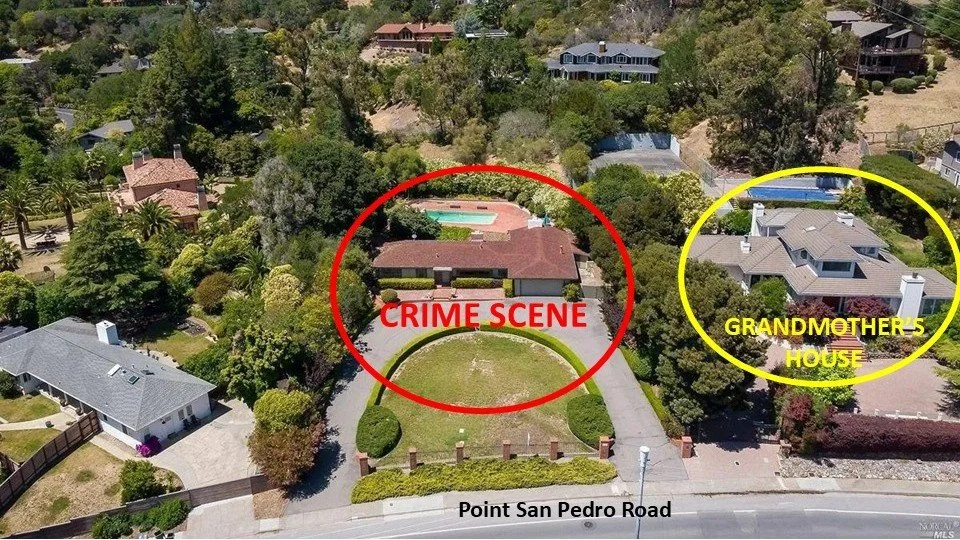
The book begins not with the crime itself, but with the house: where the author grew up. It is filled with memory, childhood geography, ordinary rooms, light, and family life. These opening grounds the reader emotionally before the narrative turns to November 15, 1973, when Fischer was found bound and fatally shot after her husband returned from work. Her two-year-old daughter was found unharmed inside the home, creating one of the book’s central emotional through-lines: a child present at the edge of violence, and a family forced to live with unanswered questions. See more pictures of the Crime Scene.
The middle of the book follows the long silence after the case went cold. It examines failed leads, suspects, investigative limits, and the forensic tools that were unavailable in the 1970s. At the same time, it reflects on what it means to live beside an unresolved tragedy—how memory, distance, and silence shape the people connected to a place and a crime. The eventual scientific breakthrough becomes a turning point, as preserved evidence and modern DNA methods connect the past to Michael Eugene Mullen decades later.
The later sections shift from investigation to accountability. The book traces Mullen’s arrest in Idaho, the changing statements and contradictions attributed to him, and the careful distinction between documented behavior and speculation. It then moves into the trial: the prosecution’s story, the defense’s “just DNA” argument, witness testimony, courtroom tension, jury deliberation, and the verdict. Dr. Campbell’s neuropsychological background gives special weight to the chapters on memory, aging, competence, jury psychology, and the limits of certainty.
The final chapters return to the deeper human question: what does justice mean after fifty years? 50 Years of Silence is not simply about solving a cold case. It is about time, truth, memory, evidence, and the fragile difference between closure and healing. The book closes by asking what a verdict can restore, what it cannot, and how stories preserved across generations may finally give voice to what silence tried to bury.